Pain in your big toe – gout
Pain in your big toe – gout
What is gout?
Gout is a type of arthritis that causes sudden, severe joint pain. It is more common in men, especially as they get older. Gout can come back every few months or years. It can come back more often if it’s not treated. Painkillers can help the pain and healthier lifestyle choices can prevent future attacks.
If you get repeated attacks of gout over a long period of time (chronic gout), and these are not treated it can lead to damage in your joints, but this is rare.
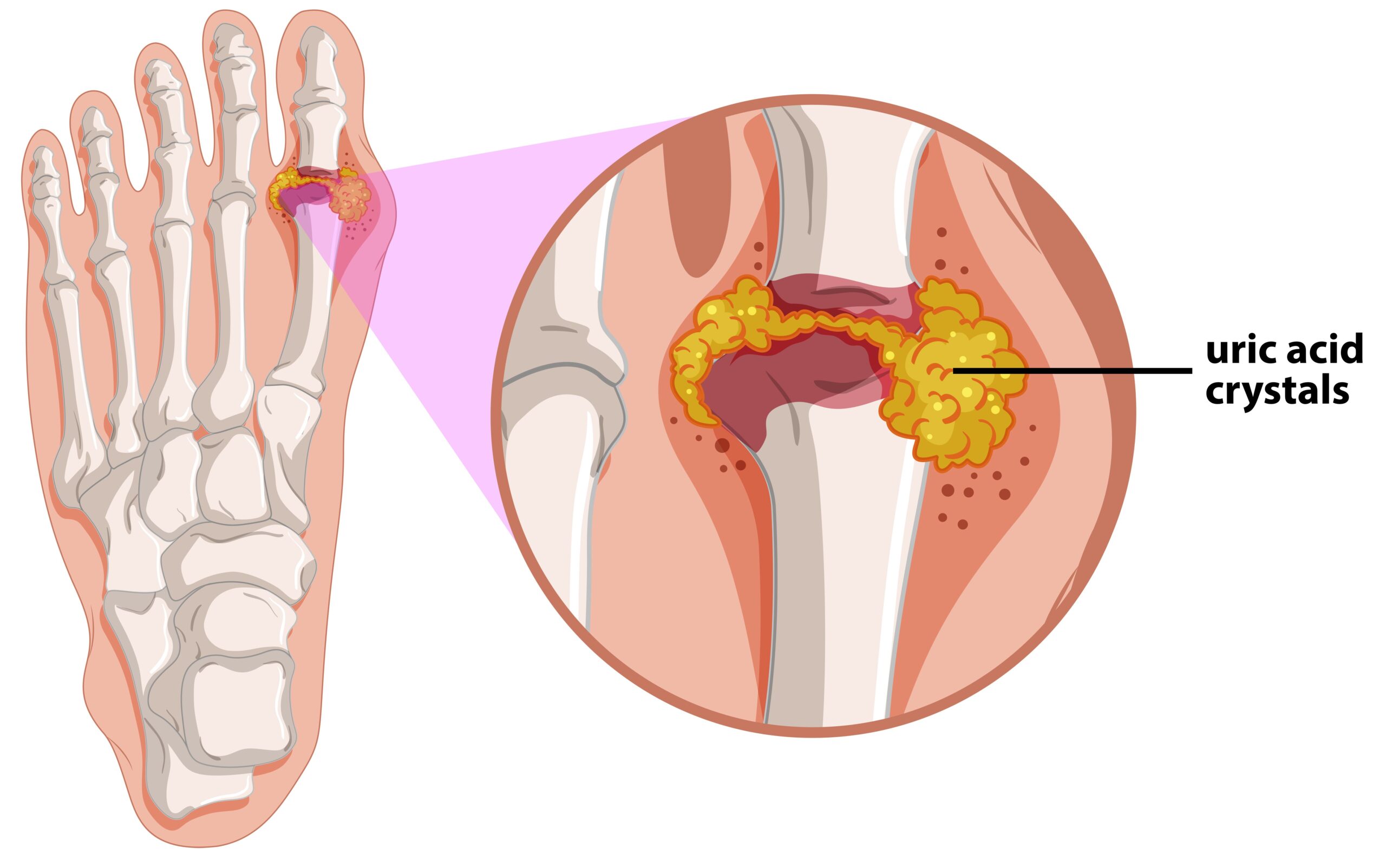
Signs and symptoms of gout
The main symptoms of gout are:
- sudden severe pain in a joint – usually your big toe, but it can be in other joints in your feet, ankles, hands, wrists, elbows or knees
- hot, swollen, red skin over the affected joint, redness may be harder to see on black or brown skin.
What causes gout?
Gout is caused by a build up of uric acid in the blood which forms sharp crystals in the joints, leading to pain, redness and swelling. The build up of uric acid occurs when your body produces too much or your kidneys don’t remove it efficiently.
Gout sometimes runs in families. You might have a higher chance of getting gout if you:
- are overweight
- drink alcohol
- have been through the menopause
- take medicines such as diuretics (water tablets), or medicines for high blood pressure (such as ACE inhibitors)
- have high cholesterol, high blood pressure, kidney problems, osteoarthritis or diabetes
- have had surgery or an injury
Things that can trigger a gout attack include:
- an illness that causes a high temperature
- drinking too much alcohol or eating a very large meal
- getting dehydrated
- injuring a joint
- taking certain medicines.
What can I do to relieve the pain of gout?
Things to try
- take any medicine you’ve been prescribed as soon as possible, it should start to work within two days
- rest and raise the limb
- keep the joint cool, apply an ice pack, or a bag of frozen peas, wrapped in a towel for up to 20 minutes at a time
- drink lots of water (unless a GP tells you not to)
- try to keep bedclothes off the affected joint at night.
Things to avoid
- putting pressure on the joint, this can make the pain feel worse
When to get help
An attack of gout usually lasts one to two weeks if left untreated. If you do not get treatment, future attacks may last even longer. Leaving gout untreated may cause lasting damage to joints. Get treatment immediately if you feel an attack starting. See a GP if you have symptoms of gout for the first time or you have gout and your usual treatments are not helping.
Ask for an urgent GP appointment or get help from NHS 111 if:
You have a sudden pain and swelling in a joint and:
- the pain is getting worse
- you also have a very high temperature (you feel hot and shivery)
- you also feel sick or cannot eat.
Attacks of gout are usually treated with a non-steroidal anti-inflammatory (NSAID), like ibuprofen. If the pain and swelling does not improve you may be given steroids as tablets or an injection. If you have frequent attacks or high levels of uric acid in your blood, you may need to take uric acid-lowering medicine regularly, even when you no longer have symptoms.
Stopping or reducing gout attacks
Making healthy lifestyle choices may mean you can stop or reduce further gout attacks
Things to try
- losing weight if you are overweight, but avoid crash diets
- eating a healthy diet, your doctor may give you a list of foods to include or limit
- having some alcohol-free days each week, try not to drink more than 14 units of alcohol a week
- drinking plenty of fluids to avoid getting dehydrated
- exercising regularly, but avoiding intense exercise or putting lots of pressure on joints
- stopping smoking
- asking your GP about vitamin C supplements.
Things to avoid
- lots of sugary drinks and snacks.