Pain in your big toe – bunion
Pain in your big toe – bunion
What is a bunion (hallux valgus)?
Hallux valgus is a bony lump on the inside of your foot at the big toe joint better known as a bunion. The bony lump can increase stress on your tendons, causing your big toe to move towards your second toe.
Bunions are the most common condition affecting the front of the foot in adults, with more women than men affected. They can occur on one or both feet, but usually one foot is more affected than the other.
Many people who have bunions have no pain and require no treatment, however some can develop significant pain and deformity.
A bunion can make your foot wider, making your footwear feel tighter. Tight fitting footwear then causes rubbing and friction over the bunion and the skin can become red and swollen. In some cases the skin can thicken or blister.
A small fluid-filled sack called a bursa may develop over the bunion which can be inflamed, swollen and painful. This is your body’s attempt to protect the area that is having the stress and pressure applied to it. The severity of the pain will depend on how much pressure there is from your footwear.
Finding comfortable footwear can be a problem depending on the severity of the bunion, but you may find our footwear advice page helpful.
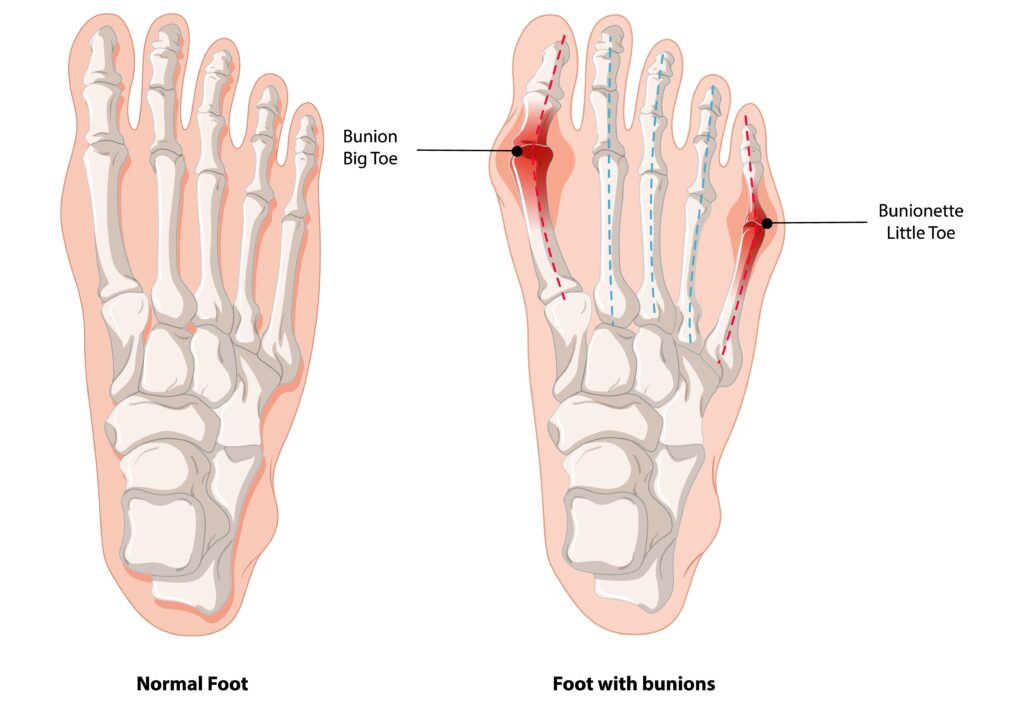
Signs and symptoms of bunions
You may experience any or all of these symptoms:
- a bony lump on the inside of the big toe joint
- deviation of the big toe towards the second toe
- pain, stiffness and swelling of the big toe joint
- inflamed, swollen or hard skin over the bunion
- difficulty in finding footwear that fits comfortably
- deformity of the smaller toes.
What causes bunions?
The shape of the bones in your feet and ill-fitting footwear are well known causes of bunions. Footwear that doesn’t fit well can cause your bunions to be more uncomfortable and may increase the risk of developing problems in the future.
Other contributing factors include:
- previous injuries or trauma to your toe joints
- hypermobility or flexible joints
- age
- inflammatory arthritic conditions such as Rheumatoid Arthritis or Psoriatic Arthritis
- tightness in the muscles in the back your leg
- neuromuscular conditions such as stroke, Cerebral Palsy, Multiple Sclerosis or hereditary motor and sensory neuropathy
- activities that place increased stress through your big joint, like walking, running or other sporting activity.
What can I do to relieve the pain of a bunion?
There are a number of things you can do to reduce the pressure on your bunion – this will not correct the deformity or change the size or shape of the bunion, but it will help to relieve pain. Making changes to your lifestyle so you reduce aggravating activities is key.
Things to try:
- raising your foot on a stool and resting it when you can
- putting an ice pack (or bag of frozen peas) in a towel on the painful area for up to 20 minutes every two to three hours
- shoes with cushioned heels and good arch support
- insoles in your footwear
- regular stretching and foot exercises
- exercises which put no pressure on your feet, such as swimming
- losing weight if you’re overweight or obese.
Things to avoid:
- walking or standing for long periods
- wearing high heels or tight, pointy shoes
- wearing flip-flops or backless slippers
- walking barefoot on hard surfaces.
What shoes should I wear if I have a bunion?
It is important that you choose footwear that is wide and deep enough to accommodate your bunion (and any lesser toe deformities) with a softer material on the upper/ top section around the lacing area.
Softer materials can mould around deformity easier than hard patent leathers. If your shoe is too narrow it will rub on the bunion causing the surrounding skin to become red, swollen and in some cases thickening or blistering.
Find out more on our footwear advice page including how to check if shoes fit.
Ankle, foot and toe rehabilitation exercises
The video exercises shown below will help to improve your pain over a period of time. Watch the video first, then try the exercise. There are nine videos to try – go through to the next one below by clicking the arrow on the right of the video. All videos provided and shared with kind permission of, and thanks to, the Musculoskeletal Podiatry team at NHS Lanarkshire.
You need the use of a clear space of wall, a small towel, a small plastic bottle of water, a sports resistance band and a sports therapy ball. If you do not have a sports resistance band or sports therapy ball (also known as a soft spiked massage ball) these can be purchased relatively inexpensively online. If cost is an issue, focus on the exercises which do not use that equipment.
Important – pain levels: the NHS uses a pain scale where pain is measured from 0-10 (zero being no pain and 10 representing the worst pain you could imagine).
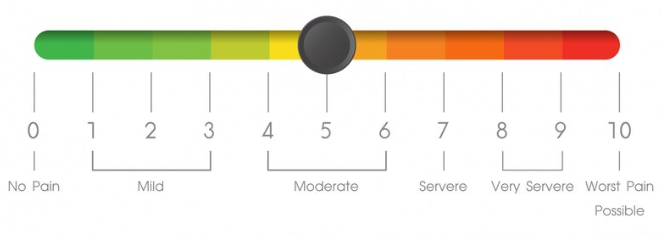
If you can identify the level of pain you are experiencing, you will find out if you are in the green, amber or red zone.
When you are completing your rehabilitation exercises it is often best to work within the green (and sometimes amber zones depending on what you deem is an acceptable level of pain) both during the exercises and within 48 hours of completing your exercises.
The best way to move down to the green zone is by pacing and spacing your activity. If you find yourself in the red zone you are likely pushing yourself too hard and the pain may flare up.
If you notice a large increase in your pain after doing the exercises, or you find that after six to twelve weeks there is no noticeable changes in your day to day symptoms, then please contact your GP or self-refer to our MSK podiatry team.